
Custom Retainer Case Finishes for Dental Brands
Compare molded matte and glossy surfaces, high-gloss and soft-touch coatings, pearl paint, metallic finishes, vacuum metallization, water-slide decals, and water-transfer printing for branded retainer cases.
📋 Key Facts
- •Unbranded retainer cases in available stock colors can be purchased from 1 PC
- •Matte and glossy are molded surfaces, not post-production paint coatings
- •Custom molded colors start at 2,000 PCS
- •High-gloss, soft-touch, pearl, metallic paint, and vacuum metallization projects generally start at 3,000 PCS
- •Water-slide decal and water-transfer printing projects start at 1,000 PCS
- •Metallic paint and vacuum metallization are separate processes with different visual effects
- •A physical pre-production sample and written specification should be approved before mass production
A standard plastic retainer case does not have to look standard. For established dental brands, clear-aligner companies, premium clinics, and distributors, the case can become a recognizable part of the patient experience through its surface texture, touch, color, reflectivity, and full-body artwork.
Uvcare offers three main customization layers on selected existing case designs: molded matte or glossy surfaces, applied coatings and metallic effects, and full-body decorative processes. The best route depends on the brand effect, order quantity, case geometry, artwork, and approved physical sample.
Quick Answer: Finish Options and MOQ
Unbranded cases in an available stock color can be purchased from 1 PC. Matte and glossy are molded surfaces, so selecting an in-stock version does not require a separate coating process. A custom molded color starts at 2,000 PCS. High-gloss clear coating, soft-touch coating, pearl paint, metallic paint, and vacuum metallization generally start at 3,000 PCS. Water-slide decal and water-transfer projects start at 1,000 PCS. Final MOQ is confirmed for the selected case, finish, color, artwork, and packaging combination.
Understand the Three Customization Layers
| Layer | What Changes | Typical Options |
|---|---|---|
| Molded surface | The texture created by the injection mold | Matte or glossy |
| Applied finish | The visual or tactile layer added after molding | High-gloss, soft-touch, pearl, metallic paint, vacuum metallization |
| Full-body decoration | Graphics or patterns transferred onto the case surface | Water-slide decal or water-transfer printing |
These layers are different from logo printing. A project can combine a molded color, a selected finish, and a logo, provided the process order and compatibility are confirmed during sampling. See our custom logo printing guide for localized branding methods.
1. Molded Matte Finish
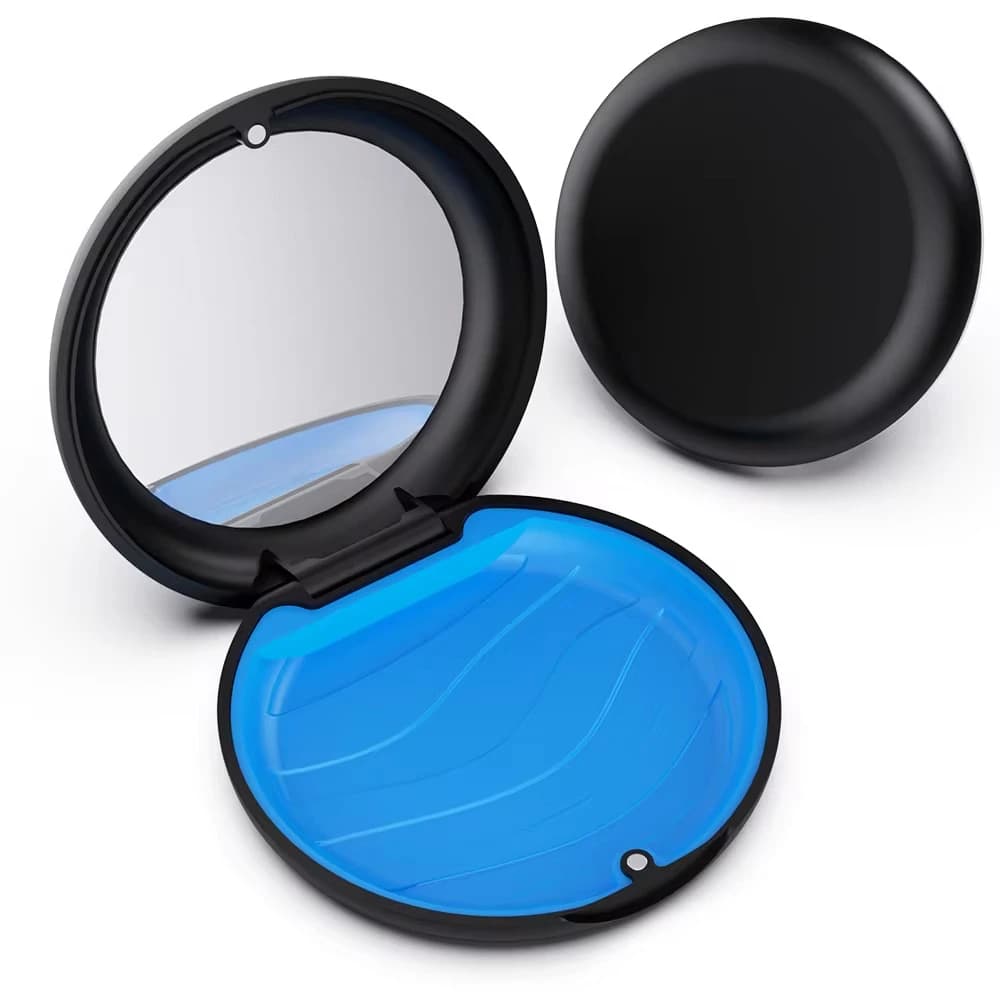
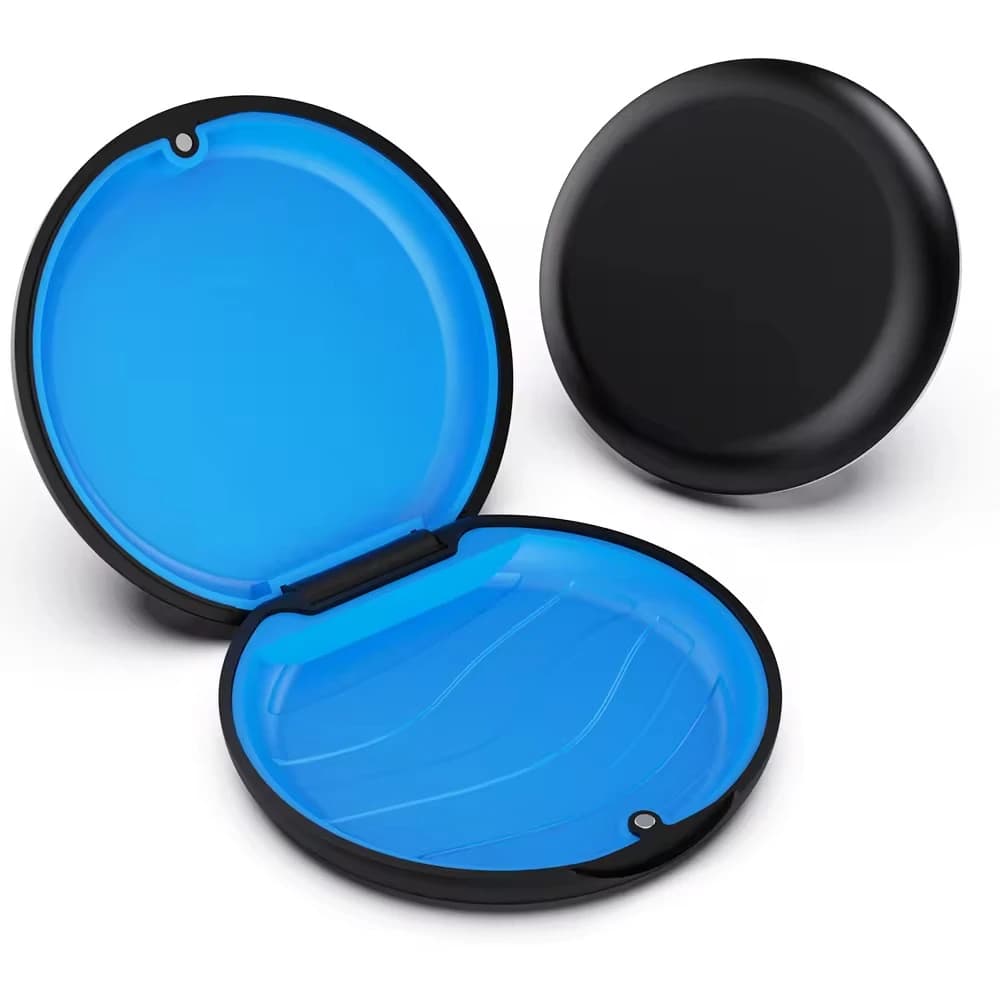
A molded matte finish comes directly from the mold surface. It is not a paint or post-production coating. The lower-reflection appearance works well for dental brands seeking a restrained, clinical, minimalist, or professional identity.
- Best for: Professional dental brands, minimalist kits, and understated color palettes
- Stock route: Unbranded in-stock colors are available from 1 PC
- Custom color route: Custom molded color starts at 2,000 PCS
- Design note: Confirm the actual texture on a physical case because matte appearance changes with color and lighting
2. Molded Glossy Finish
A molded glossy finish is also produced directly by the tooling, but the mold surface is polished to create more reflection. It can make color appear brighter and suits consumer-focused, youthful, fashion-led, or high-visibility product lines.
- Best for: Bright brand colors, retail presentation, and visually energetic collections
- Stock route: Unbranded in-stock colors are available from 1 PC
- Custom color route: Custom molded color starts at 2,000 PCS
- Important distinction: Molded gloss is not the same as a sprayed high-gloss clear coat
3. High-Gloss Clear Coating
A high-gloss clear coating is applied after molding. It creates a stronger coated shine than a standard molded glossy surface and can change how saturated or reflective the base color appears. This route is useful when a brand wants a lacquered, polished presentation on an existing case design.
- Typical MOQ: 3,000 PCS
- Best for: Beauty-inspired dental brands, premium retail collections, and gift-oriented kits
- Sample checks: Gloss level, color shift, coating coverage, edges, opening areas, and approved cleaning instructions
4. Soft-Touch Coating
A soft-touch or soft-feel coating adds a tactile layer after molding. It can give the case a smoother, warmer, or more cushioned hand feel than untreated plastic. The precise coating system and approved surface reference should be recorded in the project specification.
- Typical MOQ: 3,000 PCS
- Best for: Premium treatment programs, lifestyle brands, and gift-set presentation
- Sample checks: Tactile feel, odor, color, friction marks, coating adhesion, and compatibility with the intended use and cleaning instructions
5. Pearl Paint
Pearl paint introduces fine reflective particles that create a changing highlight under different viewing angles. The result has more depth than a flat solid color without requiring a mirror-like metallic appearance.
- Typical MOQ: 3,000 PCS
- Best for: Boutique clinics, beauty-led oral-care brands, premium patient gifts, and coordinated care kits
- Design note: Evaluate the pearl effect under several lighting conditions and approve a physical reference sample
6. Metallic Paint
Metallic paint uses a sprayed coating to create a silver, gold, rose-gold, or other metal-inspired appearance while retaining the underlying plastic case. It offers a different production route and visual depth from vacuum metallization.
- Typical MOQ: 3,000 PCS
- Best for: Premium collections, limited-edition colorways, and metallic brand palettes
- Sample checks: Metallic tone, particle appearance, coverage, edge consistency, and logo contrast
7. Vacuum Metallization
Vacuum metallization deposits a thin metallic-looking layer onto a prepared plastic surface. It can create a more reflective finish than metallic paint and is suitable for selected areas or broader case coverage, depending on the case structure and production plan.
- Typical MOQ: 3,000 PCS
- Best for: High-impact silver, gold, chrome-like, or luxury visual concepts
- Project note: Specify whether the effect applies to the lid, base, trim, or the broader exterior, and approve the exact construction through sampling
8. Water-Slide Decals
Water-slide decals transfer printed artwork from a carrier onto the prepared case surface. They can support multi-color illustrations, decorative graphics, and wider branded layouts that are not practical with a simple one-position logo print. Coverage depends on artwork and case geometry.
- Typical MOQ: 1,000 PCS
- Best for: Illustrated collections, multi-color branded artwork, and designs with controlled graphic placement
- Artwork note: Confirm the printable area, seams, curves, edges, and final protective process before production
9. Water-Transfer Printing
Water-transfer printing, also called hydrographic or hydro-dip printing, transfers a printed film across complex three-dimensional surfaces. It is the preferred route when the brand wants a repeating pattern, gradient, texture, or broader full-body design rather than a small isolated logo.
- Typical MOQ: 1,000 PCS
- Best for: Distinctive patterns, graphic-led brands, special collections, and products that need recognition from every viewing angle
- Sample checks: Pattern position, stretching around curves, seams, edge coverage, color, and consistency between cases
For a deeper comparison between stock color, custom molded color, color accents, and hydrographics, read our custom color retainer case guide.
Finish and MOQ Comparison
| Finish | Process | Typical MOQ | Best Fit |
|---|---|---|---|
| Stock matte | Molded texture | 1 PC, subject to stock | Samples, small unbranded orders, professional styling |
| Stock glossy | Molded polished surface | 1 PC, subject to stock | Samples, small unbranded orders, bright styling |
| Custom matte or glossy color | Custom-colored resin and molded surface | 2,000 PCS | Exact brand color on the whole case |
| High-gloss coating | Applied clear coating | 3,000 PCS | Lacquered, highly reflective appearance |
| Soft-touch coating | Applied tactile coating | 3,000 PCS | Premium hand feel |
| Pearl paint | Applied pearl coating | 3,000 PCS | Subtle reflective depth |
| Metallic paint | Applied metallic coating | 3,000 PCS | Metal-inspired color with controlled sheen |
| Vacuum metallization | Deposited metallic-looking layer | 3,000 PCS | Chrome-like or highly reflective concepts |
| Water-slide decal | Transferred printed artwork | 1,000 PCS | Controlled multi-color graphics |
| Water-transfer printing | Hydrographic film transfer | 1,000 PCS | Patterns and broader full-body decoration |
Which Finish Fits Your Brand Position?
- Clinical, professional, or minimalist: Start with molded matte.
- Bright, youthful, or retail-led: Compare molded glossy and high-gloss coating.
- Premium tactile experience: Evaluate soft-touch coating.
- Boutique, beauty, or gift positioning: Consider pearl paint.
- Luxury, limited-edition, or high-impact: Compare metallic paint with vacuum metallization.
- Graphic-led identity or all-over pattern: Compare water-slide decals with water-transfer printing.
What to Include in a Surface-Finish RFQ
A useful request for quotation should identify the selected retainer case, estimated quantity, stock or Pantone color, desired surface effect, areas to be treated, logo artwork, full-body artwork if applicable, individual packaging, target market, and required delivery date. Reference photos can communicate the direction, but a production project should be based on a written specification and an approved physical sample.
Approve the Physical Sample, Not Only the Rendering
Lighting, screen settings, plastic color, coating thickness, case curves, and the selected process all affect the final appearance. Before mass production, review the physical sample for gloss, touch, color, graphic position, seams, edges, opening and closing areas, logo contrast, visible handling marks, and packaging protection. Keep the approved sample and written specification as the production reference.
Surface customization can also be coordinated with product selection, accessories, and presentation packaging through our custom aligner care kit manufacturing service. Send us your target finish, artwork, case model, and quantity for a project-specific recommendation.
💬 Frequently Asked Questions
What is the MOQ for matte or glossy retainer cases?+
What is the difference between molded gloss and a high-gloss coating?+
Can a matte or glossy retainer case use my Pantone brand color?+
What is the MOQ for soft-touch, pearl, or metallic retainer case finishes?+
Can water-transfer printing cover the whole retainer case?+
What is the difference between metallic paint and vacuum metallization?+
Can I combine a special surface finish with my logo?+
Do I need a physical sample before mass production?+
Related Products
Related Articles
Interested in our solutions?
Contact us for bulk pricing and OEM customization.