
How to Choose a Dental Gift Box: Five Formats Compared
A buyer guide to the five presentation formats Uvcare manufactures — what each one holds, how insert choice changes cost and protection, and why capacity follows the insert rather than the outer size.
📋 Key Facts
- •Uvcare manufactures five dental gift box formats from 24x18x9cm up to 35x16x11.5cm, all from 1000 PCS and a 20-day lead time
- •Gift box capacity is set by insert layout rather than outer footprint: a 24x18x9cm box holds 20 aligner pairs while a 23.8x13.7x5cm box holds four
- •Inserts are cut rather than moulded, so a new accessory layout needs a new cutting file, not a new mould
- •Dental Gift Box V1 measures 30.5x15.2x10.2cm, which is exactly 12x6x4 inches
A dental gift box is usually specified backwards. A buyer decides they want presentation packaging, picks a box that looks right in a photo, and only then discovers that the aligner case does not fit, or that there is nowhere to put the instruction booklet. The box gets re-quoted, the timeline slips, and the artwork has to be re-approved for a different size.
It works far better the other way round. This guide compares the five presentation formats Uvcare manufactures, and works through the three variables that actually decide which one you need: how many aligner pairs go in, whether a case and remover go in alongside them, and whether printed literature needs its own compartment.
The Short Answer
Choose the box by its contents, then choose the insert. Uvcare builds five presentation formats between 24×18×9cm and 35×16×11.5cm. The smallest carries one square sterilizer case, a booklet and four aligner pairs stored beneath the insert; the largest carries 20 pairs in sealed pouches plus a case and a remover. All five start at 1000 PCS with a lead time from 20 days.
Start From the Contents, Not the Box
Three questions settle the format before any artwork is discussed.
- How many aligner pairs? Pairs are stored flat in sealed pouches, so they consume footprint, not height. Four pairs need a shallow tray; 20 pairs need a long box.
- Does a case travel with them? A moulded case needs a cavity roughly 85mm square and at least 25mm deep. Adding a remover and chewie means a second, narrower slot.
- Is there printed literature? A booklet and a patient letter need a flat pocket that does not crush the contents when the lid closes — usually a recess in the insert rather than a separate box.
Answer those three and the format is decided. Where buyers go wrong is treating capacity as a function of overall size: a 24×18×9cm box and a 23.8×13.7×5cm box have almost the same footprint, but one holds 20 pairs and the other holds four, because the interior is organised completely differently.
The Five Formats Side by Side
| Format | Outer size | Insert | What it holds |
|---|---|---|---|
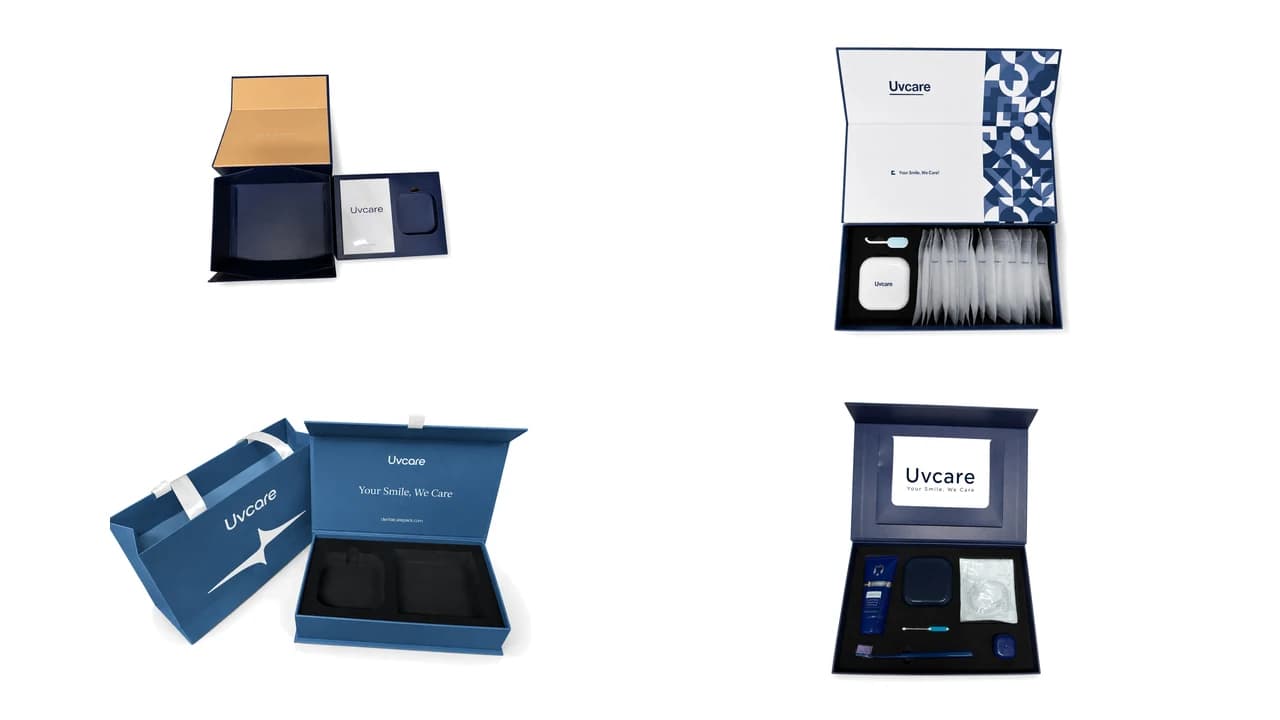
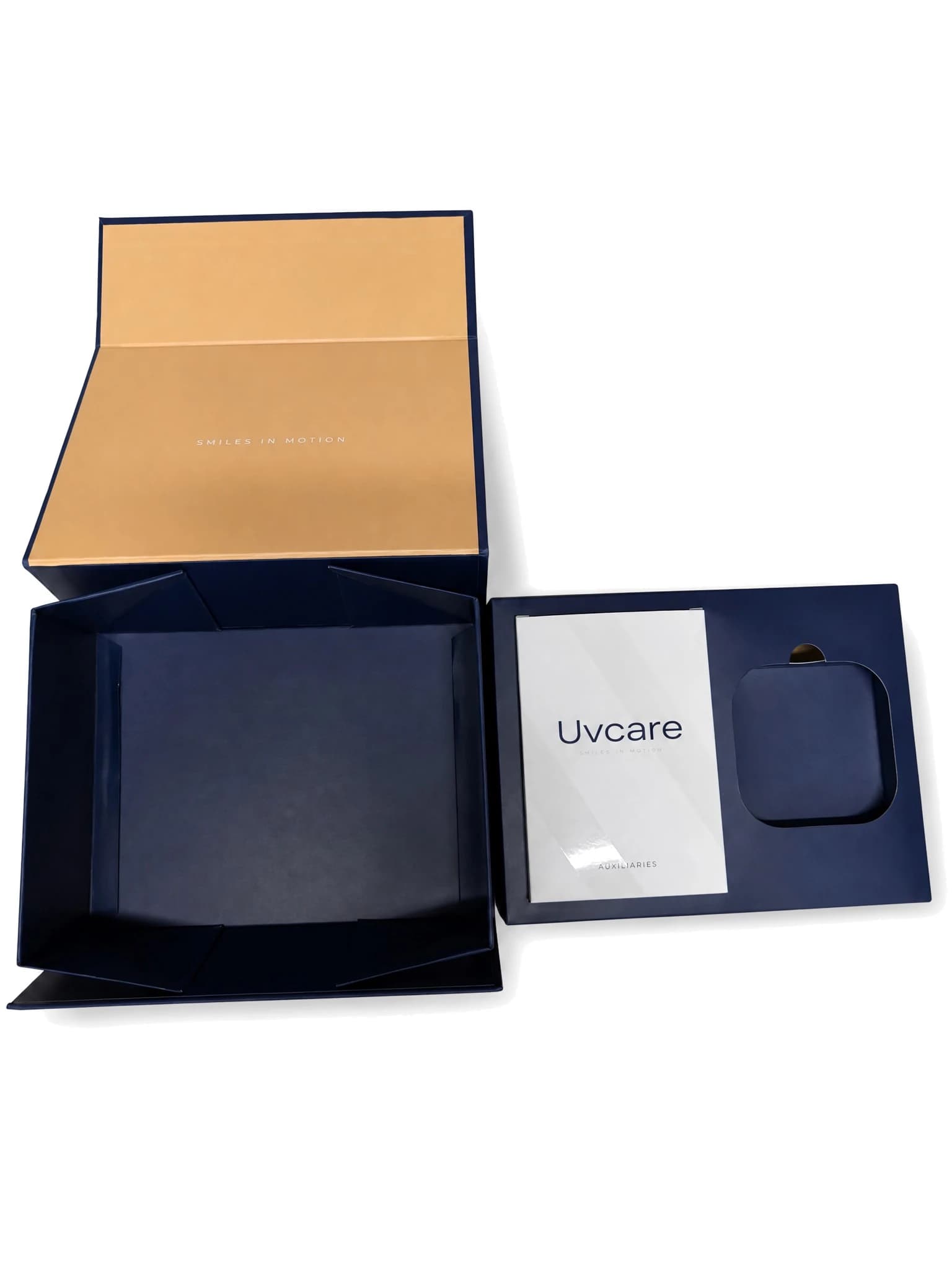
| Foldable Dental Gift Box | 24×18×9cm | Moulded cardboard insert | One square V1 sterilizer case and an instruction booklet; four aligner pairs beneath the insert |
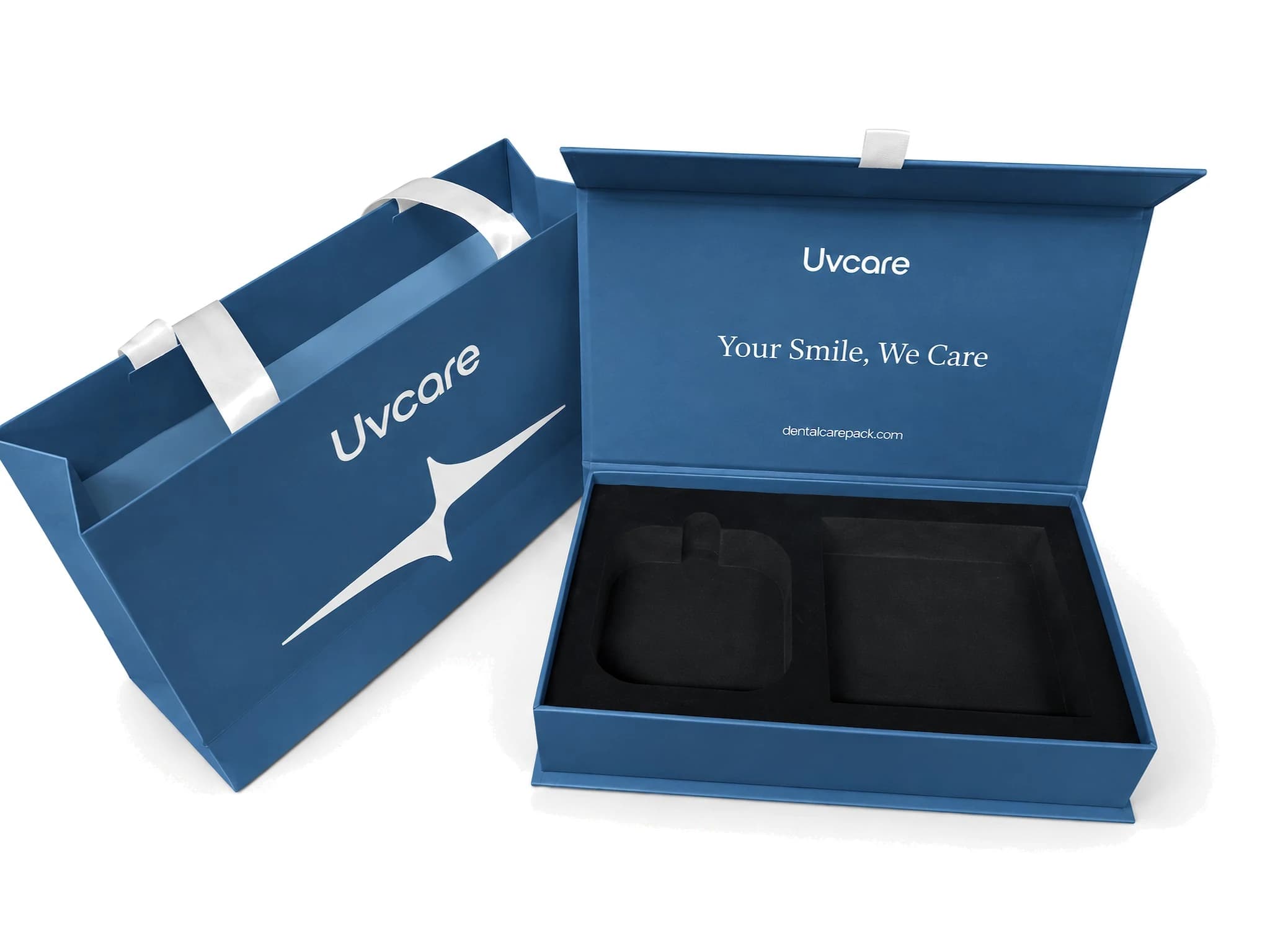
| Medium Dental Gift Box | 23.8×13.7×5cm | Black flocked EVA | One Deep Aligner Case and up to four aligner pairs; matched carrier bag included |
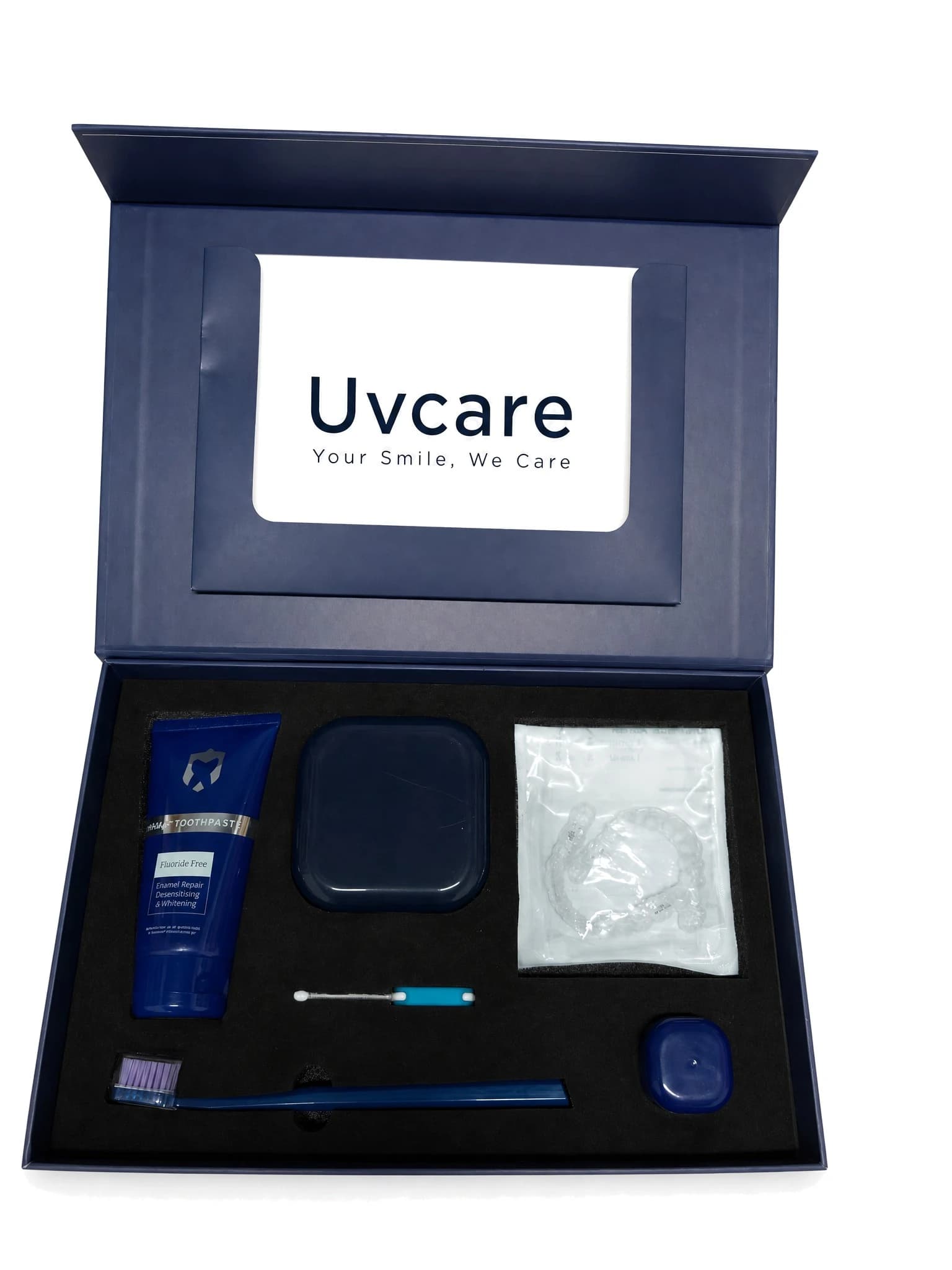
| Aligner Care Kit Full Set | 30×20×10cm | Black EVA | A complete patient kit: two cases, 2-in-1 remover and chewie, toothpaste, toothbrush, dental care cream, booklet and patient letter |
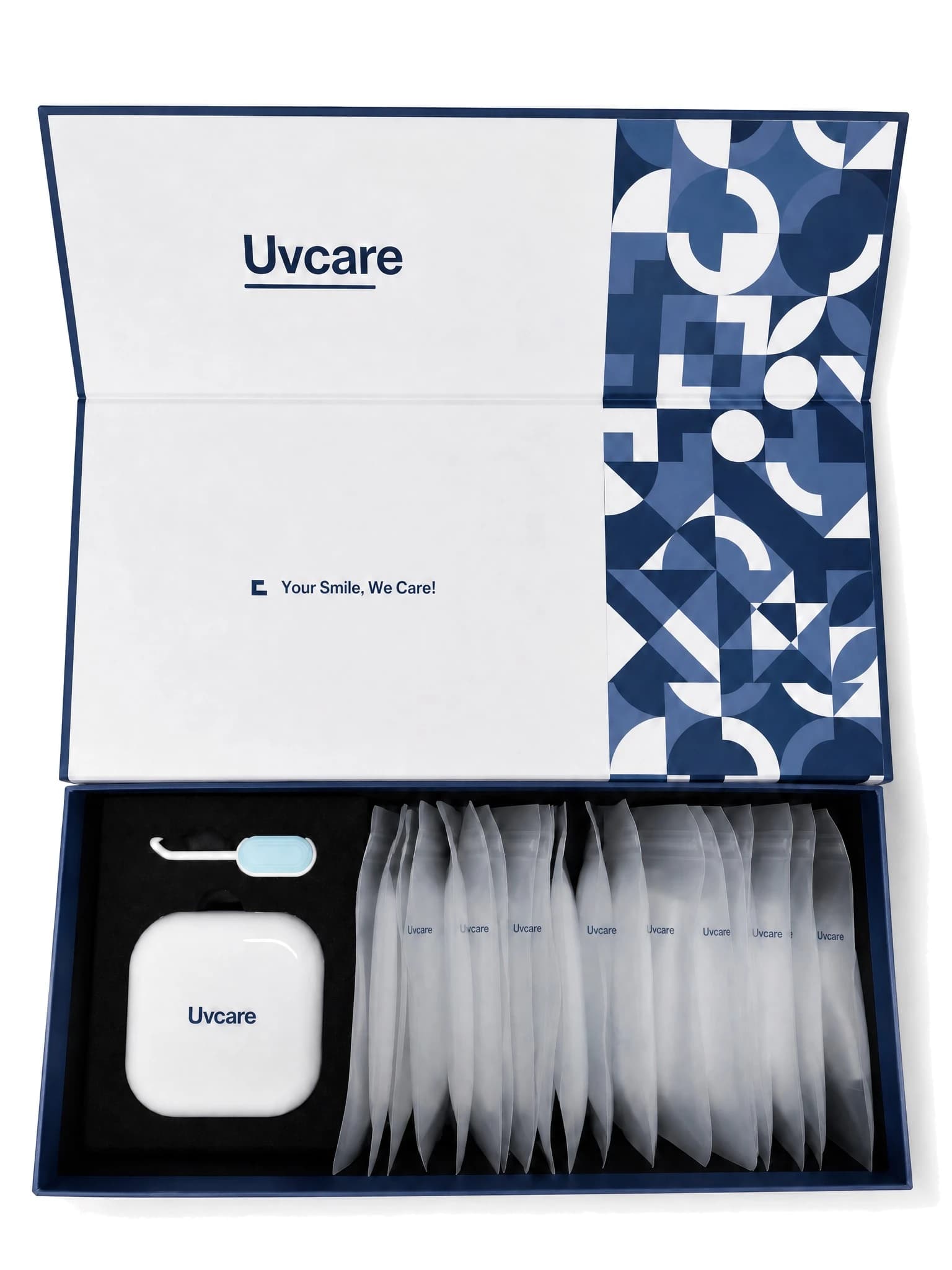
| Large Dental Gift Box | 35×16×11.5cm | Black EVA, cavities cut to fit | One square aligner case, one 2-in-1 remover and chewie, and 20 aligner pairs in pouches |
| Dental Gift Box V1 | 30.5×15.2×10.2cm (12×6×4 in) |
EVA trays, one per section | An aligner case, a second aligner case and an instruction booklet, in separate compartments |
Note the V1 dimensions. They are 12 × 6 × 4 inches exactly, not a rounded metric figure — this format was designed against an inch-based brief, which is worth knowing if your own specification sheet is written in inches and you want to avoid conversion drift at the sampling stage.
What the Outer Size Actually Tells You
Height is the constraint that catches people out. A 5cm-deep box closes comfortably over a case and four pairs; it will not close over 20 pairs plus a remover without pressing on the lid. That is why the 20-pair format is 11.5cm deep rather than simply longer — the extra depth lets the pouches stand in an arc instead of lying flat.
Footprint, meanwhile, is set by the largest single item. An aligner case at roughly 85mm square dictates a minimum slot in both directions, which is why even the smallest format is 24cm wide once you allow for walls, liner and a booklet pocket.
The Insert Is Where the Engineering Is
Every format above uses a cut insert rather than a moulded tray, and that choice matters more than the box style for most buyers. A cut insert is milled from board or EVA to the exact cavity layout, which means a new accessory layout does not require a new mould — only a new cutting file. For brands whose kit contents change between product generations, that is the difference between a two-week change and a tooling project.
- Moulded cardboard — the most economical option. It locates contents and keeps the lid from resting on them, but offers little cushioning for heavier items.
- Plain EVA — closed-cell foam that holds its shape under compression and grips pouches so they do not slide. This is the standard choice once a box carries a case plus multiple pouches.
- Flocked EVA — EVA with a short black flock surface bonded to it. The flock protects gloss finishes from scuffing during transit and reads as a premium interior; it is what the Medium Dental Gift Box uses.
- Separate EVA trays — each compartment gets its own removable tray, so a clinic can lift out the section it needs without unpacking the box. The V1 format is built this way.
Freight and Storage: the Foldable Advantage
A rigid presentation box ships assembled, so a large share of what you pay to move is air. A foldable box ships flat and is erected at the destination, which cuts carton volume substantially at the same outer dimensions. If your volumes are high and your margins are thin, this is often a bigger lever than the difference in unit cost between formats.
The trade-off is assembly labour and a slightly less rigid feel in the hand. For single-patient handover kits it is rarely a problem; for retail shelf presentation, most brands still prefer a rigid box.
Customization and What 1000 PCS Buys You
All five formats are customizable in colour, dimensions, printed content and insert cavity layout. MOQ is 1000 PCS with a lead time from 20 days.
The 1000-piece threshold is not arbitrary. Board, print and cutting setup are fixed costs incurred once per run, and a presentation box carries several of them at once: greyboard, wrap paper, print plates, laminate and a cutting die. Spread across 500 units those setups dominate the unit price; across 1000 they are diluted to the point where the material cost becomes the visible number. Below 500, the per-unit price climbs sharply rather than gradually — which is why quoting a smaller run rarely produces the saving buyers expect.
Choosing by Business Type
- A single clinic handing over a finished case — the foldable format. One case, one booklet, four pairs, lowest freight.
- A brand selling premium retail presentation — the Medium format. Book-style opening, flocked interior, carrier bag included.
- An orthodontic brand shipping a full programme — the Large format. Twenty pairs in one box, sized to the aligner count.
- A brand shipping a complete starter kit — the Aligner Care Kit Full Set, which arrives with the consumables already specified.
- Multi-part presentation with a brochure — the V1 format, where each section opens independently.
If you are still deciding what goes inside the box rather than which box to use, the component checklist for aligner starter kits covers that question first.
💬 Frequently Asked Questions
Can I order a gift box without the inserts?+
Can the cavity layout be changed without new tooling?+
What is the lead time and minimum order?+
Related Products
Related Articles
Interested in our solutions?
Contact us for bulk pricing and OEM customization.