
Gift Box Inserts Compared: EVA, Flocked EVA, Silicone and Cardboard
Which insert material protects an aligner case, a mirror or 20 pouches, and which one only holds position. Four materials compared by protection, surface and cost.
📋 Key Facts
- •Uvcare cuts gift box inserts from four materials: moulded cardboard, plain EVA, flocked EVA and silicone.
- •Flocked EVA is EVA foam with a bonded short-fibre surface; it is used in the Medium Dental Gift Box for a fabric-like presentation face.
- •Plain EVA is die-cut rather than moulded, so a new cavity layout needs a new cut file, not a new mould.
- •Silicone is used inside aligner and retainer cases for grip, not as a gift box tray.
- •All gift box formats start at 1000 PCS with a lead time from 20 days.
Buyers spend their time choosing the box and almost none on the insert, then discover at sample stage that the tray marks the gloss finish of an aligner case, or that twenty pouches slide out of position when the box is tipped. The insert is the part that touches the product.
The Short Answer
Flocked EVA for retail presentation, plain EVA for multi-item kits, moulded cardboard for a low-cost handover, silicone only inside a case. Uvcare cuts inserts from four materials across its gift box range, all from 1000 PCS with a lead time from 20 days. The material choice is driven by what has to sit in the cavity and how the box will be handled, not by which one looks best in a sample photo.
What an Insert Is Actually Doing
An insert does three separate jobs, and most specification mistakes come from optimising only the first.
- Position. Every component needs a cavity sized to its own footprint, so nothing shifts when the box is closed and carried.
- Protection. Cavity walls need enough give to absorb a knock without transferring it to the product. A rigid tray over a rigid box protects nothing.
- Presentation. The insert is the first thing a patient sees on opening. Its surface sets the perceived grade of everything above it.
Cardboard is strong on position and weak on protection. Silicone is the reverse. EVA covers all three, which is why it dominates.
Moulded Cardboard: Structural, Not Protective
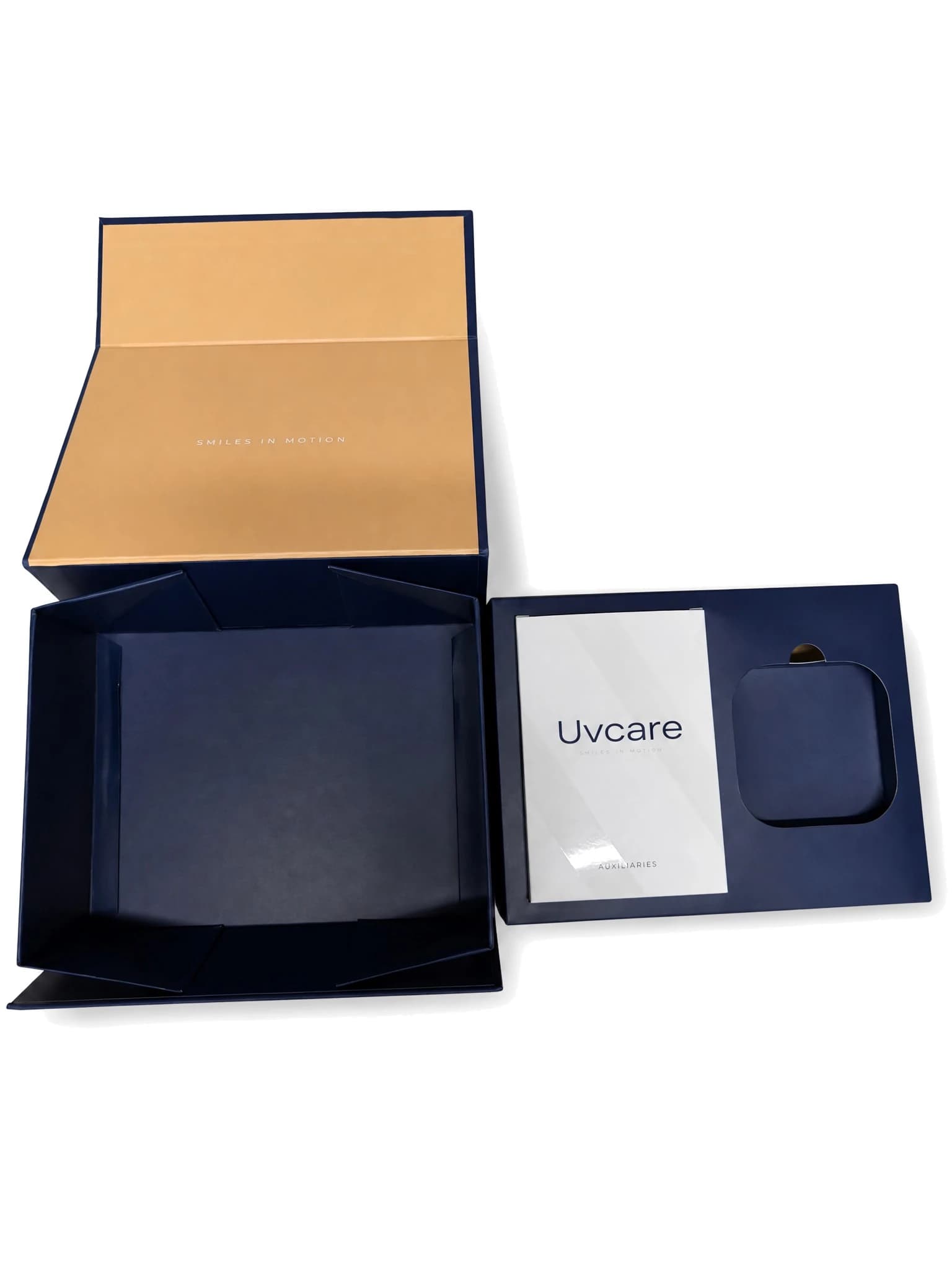
The Foldable Dental Gift Box uses a built-in cardboard insert: a square sterilizer case and an instruction booklet sit in the upper level, and the chamber beneath the tray takes four pairs of aligners. Because the tray is part of the box structure, it adds almost nothing to the unit cost and folds flat with the box for freight.
What it does not do is cushion. Cardboard holds a component in place but transmits impact straight through. For a plastic case with a sealed lid that is acceptable. For a mirror, a glass bottle or a varnished surface, it is not.
Plain EVA: The Working Default
EVA is a closed-cell foam, die-cut into cavities rather than moulded. That distinction matters commercially: a new cavity layout is a new cut file, not a new mould.
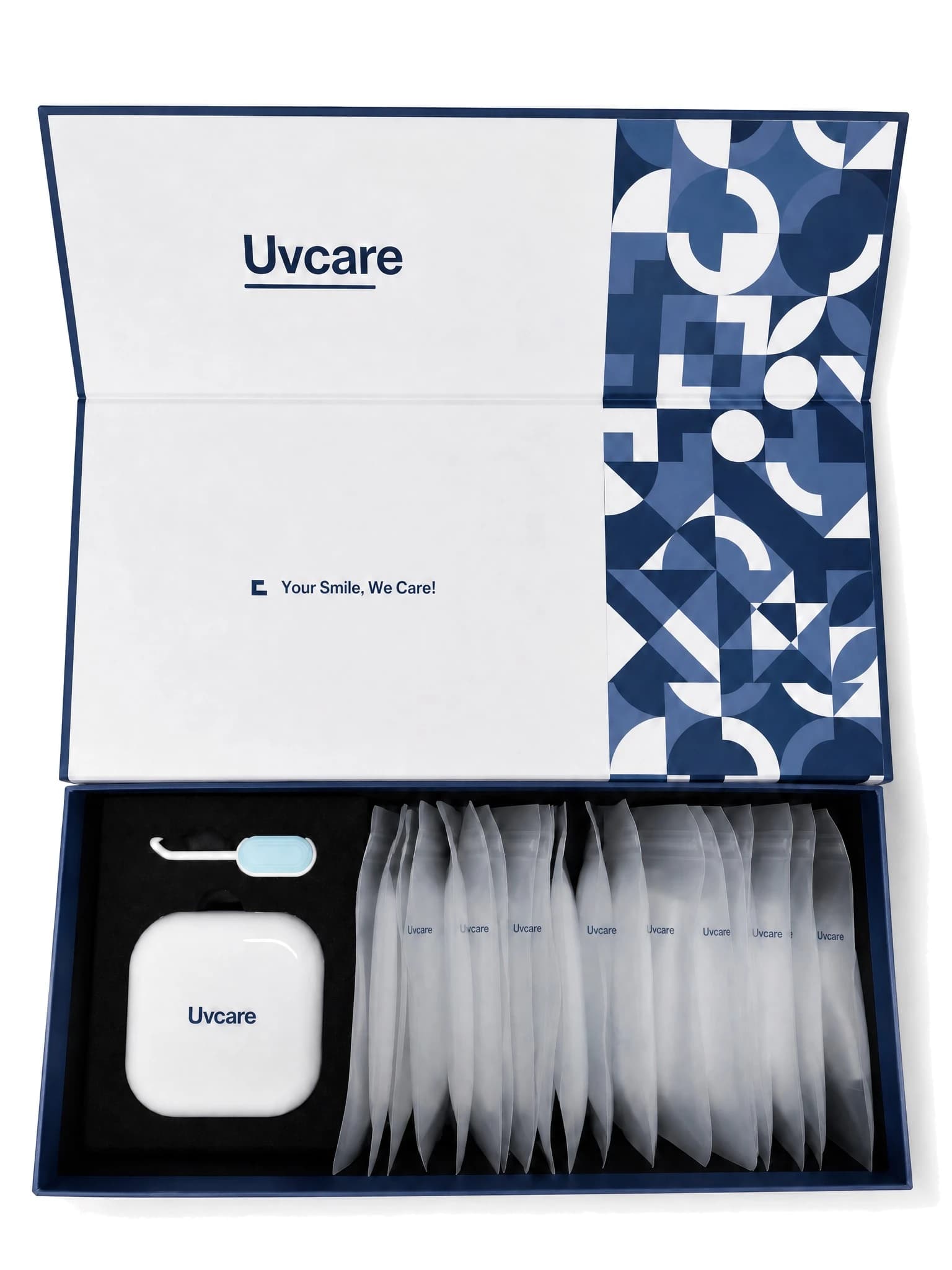
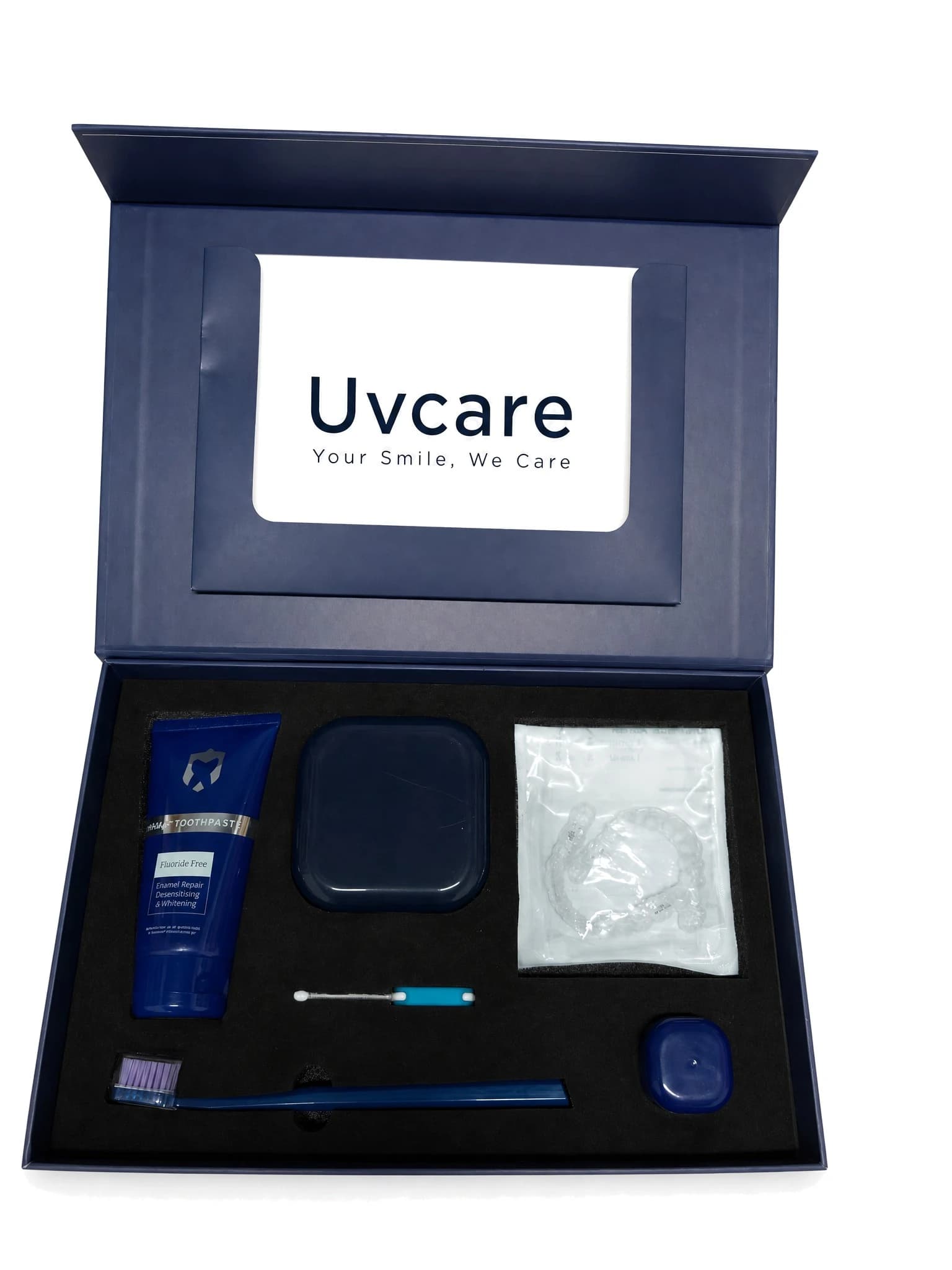
Two of our formats run plain black EVA. The Large Dental Gift Box carries one square aligner case, a 2-in-1 remover and 20 aligner pairs in pouches, all separated by cut walls. The Aligner Care Kit Full Set holds two cases, a remover, toothpaste, a toothbrush, a dental care cream, a booklet and a patient letter in the same material.
The Dental Gift Box V1 takes a different approach with the same foam: instead of one insert, each of its three sections gets its own EVA tray, so a component can be lifted out without disturbing the rest of the kit.
Flocked EVA: EVA With a Fabric Surface
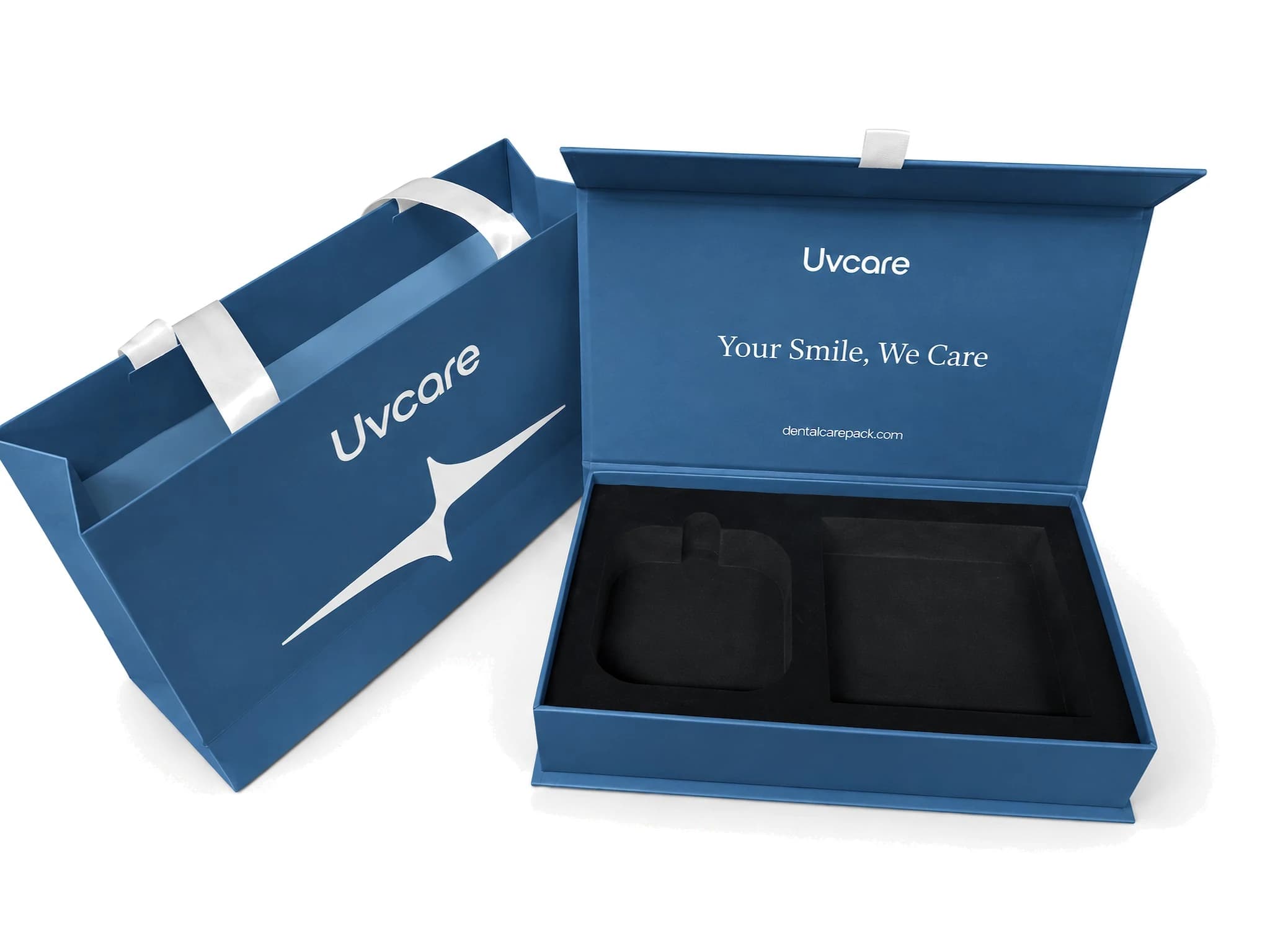
The Medium Dental Gift Box uses black EVA flocked in black. Flocking bonds a layer of short fibre to the foam surface, which changes two things.
It gives the tray a fabric face rather than a foam one, so the first impression on opening is textile, not packaging. And it produces a softer contact surface, which matters when the component in the cavity is gloss-moulded and will be photographed. Under a matte laminate lid on 1200 g greyboard, the combination reads as a retail product rather than a shipping carton.
The trade-off is handling: a flocked surface shows dust and picks up lint during packing, so it needs a clean packing area. Plain EVA hides that.
Silicone: Inside Cases, Not Inside Boxes
We do not cut gift box trays from silicone, and the reason is practical rather than stylistic: silicone is dense and expensive in the volume an insert occupies, and it does not hold a thin cut wall well at tray scale.
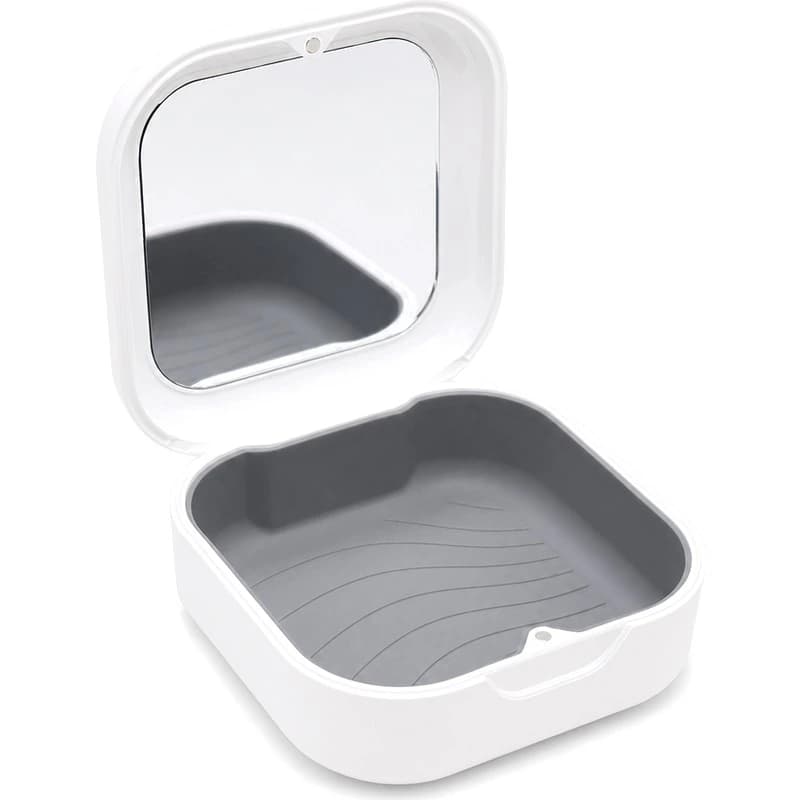
Inside a case, where the volume is small and the requirement is grip, it is the right material. The Deep Aligner Case pairs a food-grade ABS shell with a food-grade silicone insert; the round double-silicone case uses a two-layer interior for the same reason. Silicone grips an aligner without abrading it and can be washed, which is what a patient does with it every day.
Matching the Insert to the Contents
| Material | How it is made | Protection | Surface | Use it for |
|---|---|---|---|---|
| Moulded cardboard | Die-cut and folded paperboard | Low, holds position only | Paper, printable | Case plus booklet, cost-sensitive handover |
| Plain EVA | Closed-cell foam, die-cut cavities | High, absorbs knocks | Matte, technical | Multi-item kits, 20-pouch layouts, removable trays |
| Flocked EVA | EVA with a bonded short-fibre face | High, softer contact | Fabric-like | Retail gift boxes, gloss and mirrored components |
| Silicone | Food-grade silicone, moulded | Highest grip, washable | Soft, matte | Inside aligner and retainer cases only |
Custom Cavities Without a New Mould
Because EVA and cardboard are cut rather than moulded, changing a cavity is a drawing change. Moving a case slot by 5mm, adding a second pouch column or reshaping an opening for a different remover all happen at the cut stage, which is why we ask for the contents list before quoting a box.
All five gift box formats are made from 1000 PCS with a lead time from 20 days, and the insert material, cavity layout, box colour and print are specified together. If the contents are not fixed yet, the honest answer is that the insert should wait: a tray cut for the wrong case is the most expensive kind of rework, because the box is already correct.
💬 Frequently Asked Questions
Which insert material is best for an aligner case?+
Can the cavity layout be changed after sampling?+
Why is silicone not used as a gift box tray?+
Related Products
Related Articles
Interested in our solutions?
Contact us for bulk pricing and OEM customization.